
Choosing Lawn Mower Brands by Yard Size and Budget
You know what? After ten years of repairing lawn mowers in my small workshop, I’ve developed some strong opinions about buying the right one. Just last month, I had this guy come in with a brand-new $750 riding mower that he’d bought for his tiny suburban lot. The thing was so big he couldn’t even turn it around without driving over his wife’s flower beds. Made me shake my head.
Table of Contents
▼- How to Choose a Lawn Mower Based on Your Budget
- What Your Money Gets You at Different Price Points
- Shopping Smart Based on What Actually Breaks
- Best Mower Brands for Every Yard Size
- Small Yards (Under 1/4 Acre) – Less Is More
- Medium Yards (1/4 to 1/2 Acre) – The Goldilocks Zone
- Large Yards (1/2 Acre and Up) – Efficiency Becomes King
- The Ultimate Buying Guide: Key Factors to Consider
- Power Source: Your Most Important Decision
- Cutting Deck: Size and Material Matter More Than You Think
- Self-Propelled: When It’s Worth the Extra Money
- Features That Matter vs. Marketing Nonsense
- Top 5 Brands for Budget-Conscious Buyers
- 1. Greenworks: The Battery Specialist
- 2. Toro: The All-Around Champion
- 3. Honda: The Long-Term Investment
- 4. WORX: The Value Champion
- 5. Ryobi: The Tool System Play
The truth is, picking the proper lawn mower budget isn’t rocket science, but people sure make it complicated. I see folks every week who either spend way too much on features they’ll never use, or go so cheap that they’re back in my shop every spring with the same problems. Let me save you that headache.
How to Choose a Lawn Mower Based on Your Budget
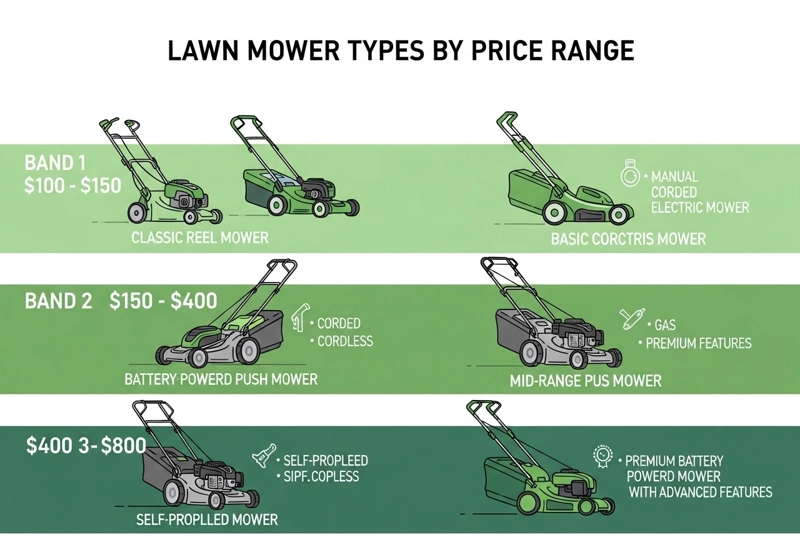
Money talks first, because let’s be honest, that’s what drives most decisions anyway. I’ve worked on mowers from $89 push models to $3,000 commercial units, and here’s what I’ve learned about where your dollars actually matter.
What Your Money Gets You at Different Price Points
Lawn Mowers Low Budgets


The $100-150 Range – Entry Level Territory
Look, I’m not gonna sugarcoat this. At this price point, you’re getting basic functionality, and that’s about it. But you know what? Sometimes, basic is exactly what you need.
I’ve still got customers using $120 reel mowers that I sold them five years ago: no engine to maintain, no gas to buy, and no spark plugs to replace. For tiny yards under 1,000 square feet, these little workhorses are perfect. The American Lawn Mower Company makes a solid one that I’ve never had to “fix” because there’s nothing to break.
Corded electric mowers also live in this space, and they’re surprisingly reliable. Just don’t expect fancy features or premium materials. The plastic will feel flimsy, but it’ll do the job if you treat it right.
$150-400 – Where Most People Should Shop
This is my sweet spot for recommending the best budget lawn mower options. You get into decent battery models, solid electric options, and entry-level gas mowers that won’t quit on you after two seasons
Battery mowers have really hit their stride in this price range. I recall when the first cordless mowers arrived at my shop in 2015, and honestly, they were pretty disappointing. Now? The Greenworks 40V models in this price bracket will handle most suburban yards without breaking a sweat. Just make sure you’re getting at least a 4.0Ah battery, or you’ll need to stop and recharge halfway through.
One thing I always tell customers: don’t get hung up on brand names here. Sometimes the store brand is made by the same factory as the premium version, just with fewer bells and whistles.
$400-800 – The Performance Sweet Spot
Now we’re talking serious equipment. Self-propelled drives that actually work smoothly, steel decks that won’t crack, and engines that start reliably even after sitting all winter.
I see way fewer warranty issues with mowers in this range. The manufacturers are using better bearings, thicker steel, and more robust engines. That extra money goes into parts that matter, not just fancy paint jobs.
If you’ve got more than half an acre, this is probably where you need to be shopping. The time savings alone justify the extra cost when you’re comparing 45 minutes of mowing to an hour and a half.
Over $800 – Premium Territory
Unless you’re cutting serious acreage or running a lawn service, you probably don’t need to spend this much. That said, I have customers who swear by their Honda HRX models, which cost $650, and I can’t argue with 15 years of reliable service.
The premium tier gives you commercial-grade reliability and features that genuinely make mowing easier. But be honest about whether you’ll actually use them.
Shopping Smart Based on What Actually Breaks
Here’s the thing about being in the repair business: you learn what fails and what doesn’t. The $200 difference between a cheap mower and a decent one usually comes down to three things that matter way more than you’d think.
Engine quality makes or breaks the experience. I’ve rebuilt more cheap Briggs & Stratton engines than I care to count, while Honda engines from the same era are still running strong.
Deck construction determines lifespan. Plastic decks crack, especially around the mounting points. Steel rusts if it is not cleaned. Aluminum costs more but handles both issues better. Factor this into your long-term costs.
Wheel bearings and height adjusters are where inexpensive mowers reveal their true nature. I can spot a budget mower from across the shop just by how wobbly the wheels are after two seasons.
Best Mower Brands for Every Yard Size
Size really does matter when it comes to mowers, and I can’t stress this enough: buying the wrong size is the fastest way to hate mowing your lawn. Let me walk you through what actually works for different situations.
Small Yards (Under 1/4 Acre) – Less Is More
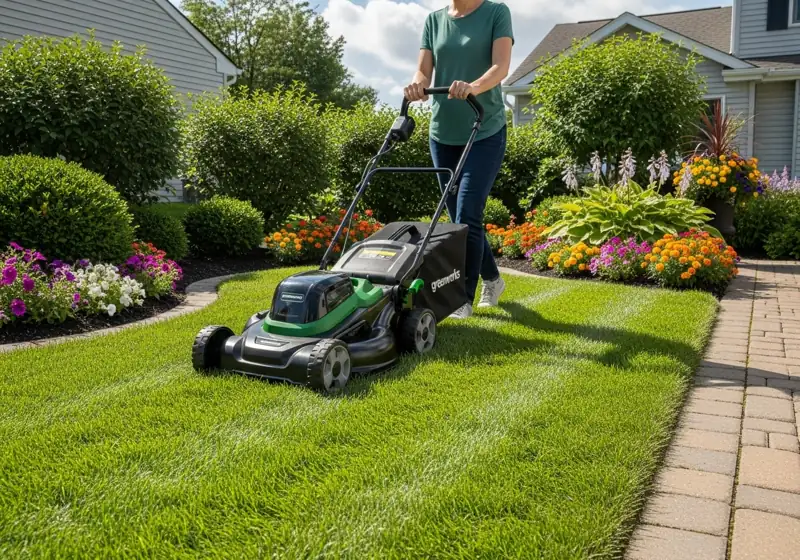
For a lawn mower suitable for small yards, consider one that is lightweight and maneuverable. I’ve watched people struggle with massive self-propelled mowers on tiny lots, and it’s just painful to see.
What Works Best:
Greenworks produces excellent battery-powered mowers for small spaces. Their 16-inch models weigh maybe 35 pounds and tuck into the smallest storage spaces. I hardly ever see these for repairs, which tells you something about build quality. The 40V system provides approximately 30-40 minutes of runtime, which is more than enough for a small yard.
BLACK+DECKER is sometimes overlooked, but its compact electrics are solid choices for tight budgets. That 3-in-1 model that does mowing, edging, and trimming? It’s actually pretty clever if you can get used to the different technique. Takes some practice, but you’ll save money and storage space.
Reel mowers from American Lawn Mower Company are my secret weapon recommendation for tiny, flat yards. Zero maintenance, completely silent, and they give your grass a cleaner cut than any rotary mower.
What to skip: Self-propelled anything is overkill and actually harder to control in tight spaces. Gas mowers are unnecessarily complicated for small areas. You don’t need that much power or noise.
Medium Yards (1/4 to 1/2 Acre) – The Goldilocks Zone
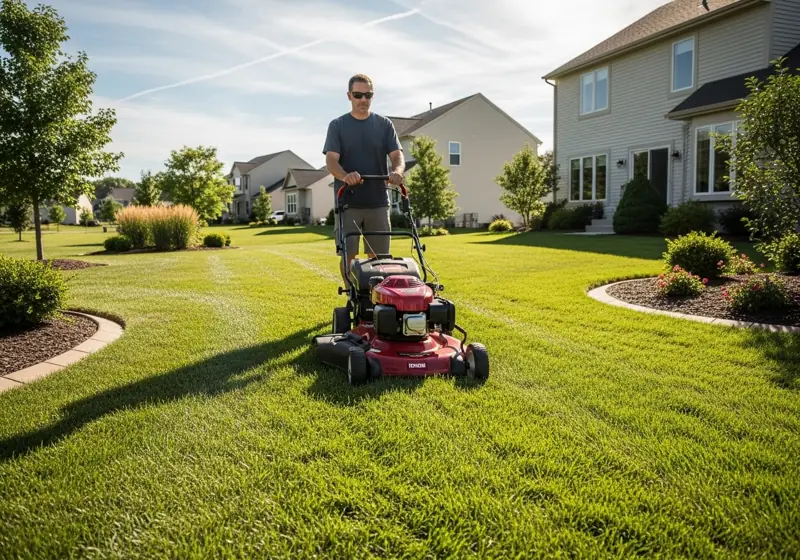
This is where most homeowners reside, and fortunately, it’s also where you have the best options. You need enough power to be efficient without going overboard.
Top Performers:
Honda mowers are expensive, but they’re costly for good reasons. I have customers running Honda mowers from the early 2000s that still start up on the first pull every spring. The HRN series hits the sweet spot for this yard size. Yes, you’ll pay $400-$ 500, but dividing that by 15 years of service makes it actually pretty reasonable.
Toro makes excellent middle-ground choices. Their Personal Pace self-propelled system is genuinely innovative; it adjusts to you’re walking speed. I see these come in for routine maintenance, but rarely for significant problems. The Recycler models mulch really well if you’re into that.
EGO has completely changed my mind about battery mowers. Their 56V system has enough grunt to handle thick grass and harsh conditions. The rapid charger means you’re not waiting around all day, and those LED headlights are surprisingly helpful if you mow early or late.
WORX offers solid value without the premium price. Their mowers punch above their weight class, and parts are readily available when needed. Not fancy, but reliable.
Large Yards (1/2 Acre and Up) – Efficiency Becomes King
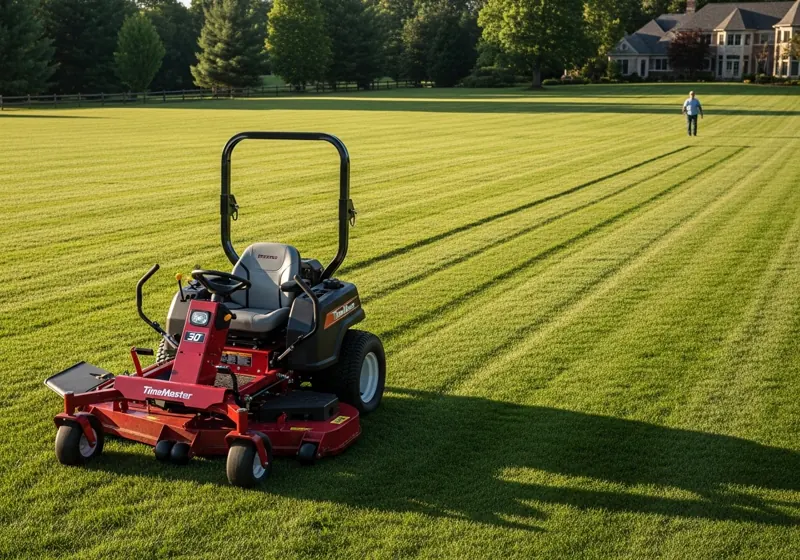
When dealing with a lawn mower for large yards, your time becomes valuable enough that efficiency features pay for themselves. Nobody wants to spend their entire Saturday pushing a mower around.
Heavy Duty Champions:
The Toro TimeMaster, equipped with a 30-inch deck, is like having a mini zero-turn mower in walk-behind form. I’ve seen these tackle yards that would typically need a riding mower. The twin-blade system cuts really evenly, and you’ll finish in half the time of a standard 21-inch mower.
Honda HRX series is premium equipment with a premium price tag, but the features actually matter at this yard size. Variable speed control, twin blades, and that Versamow system that lets you mulch or bag without changing anything. Built like a tank and designed for heavy use.
Cub Cadet produces some excellent self-propelled models that often don’t receive enough attention. The XT Enduro series uses commercial-grade components at consumer prices. I mainly see these for oil changes and blade sharpening, which is precisely what you want.
Once you reach an acre, seriously consider a riding mower or a zero-turn mower as an alternative. Walking behind anything becomes a real chore at that size, no matter how fancy the mower is.
The Ultimate Buying Guide: Key Factors to Consider
This is where I see people make the biggest mistakes in my shop. They get distracted by flashy features while completely ignoring the basics that determine whether they’ll love or hate their mower for the next five years.
Power Source: Your Most Important Decision
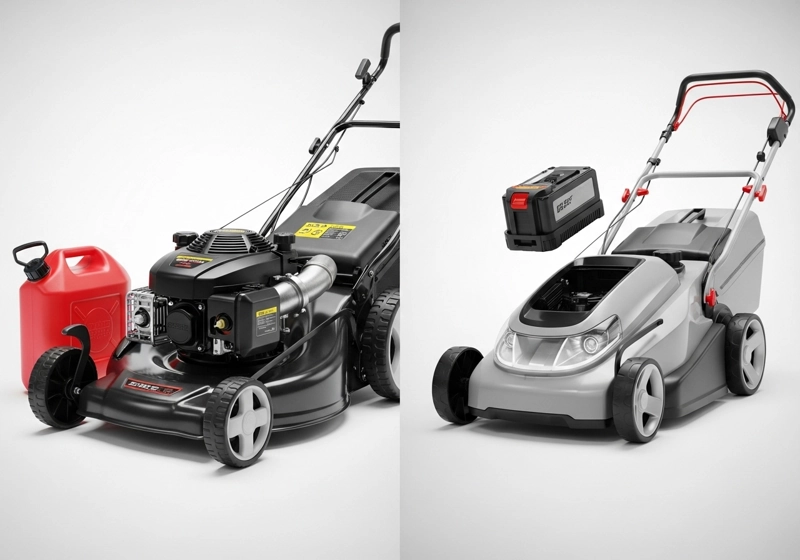
Gas Mowers: The Traditional Choice
Gas still rules for raw power and unlimited runtime. Modern gas mowers start more easily and run cleaner than their predecessors, but they still require more regular maintenance.
The good stuff: you can mow all day without stopping, with maximum power for thick grass or harsh conditions. It usually costs less upfront and works in any weather. Understanding different gas mower types can help you choose the right power level for your needs.
The not-so-good stuff: they’re loud (your neighbors will notice), you have to store gas and oil, seasonal maintenance is a real thing, and they’re heavier to push around.
Battery Mowers: The New Standard
Battery technology has improved significantly, making these devices suitable for most people now. The trick is understanding what those amp-hour numbers actually mean and being realistic about how long you can operate the mower.
What I like: it’s quiet enough to mow early in the morning without waking anyone, has zero emissions if that matters to you, requires minimal maintenance beyond keeping the blades sharp, and features push-button starting every time. [Battery-powered mowers offer excellent environmental benefits](link-to: Battery Powered Electric Lawn Mowers: A Sustainable Mowing Solution) that many homeowners are now prioritizing.
What to watch out for: The limited runtime requires planning your mowing sessions, and the higher upfront cost, especially with the purchase of extra batteries. Batteries do wear out eventually, and the mower offers less raw power than a gas model for really tough conditions.
Corded Electric: The Underrated Option
People often overlook corded mowers, but they’re ideal for specific situations: providing consistent power, offering low cost, and being surprisingly light to maneuver.
Benefits: steady power that never quits, the most cost-effective option overall, virtually no maintenance, and extremely lightweight.
Drawbacks: The cord can be a real pain with complex yard layouts, as it’s limited by outlet locations, and it’s definitely not suitable for large or complicated properties.
Cutting Deck: Size and Material Matter More Than You Think
Deck Size Guidelines I Actually Use:
For yards under 1/4 acre, stick with heights of 14 to 20 inches. Anything bigger becomes unwieldy around landscaping and tight spaces.
Quarter-acre to half-acre properties work best with 20-22 inch decks. This strikes the perfect balance between maneuverability and efficiency.
For half-acre and larger properties, opt for 22 inches or more, or consider the Toro TimeMaster with a 30-inch deck if you really want to save time.
Materials That Actually Hold Up:
Plastic decks keep the price down, but they crack eventually, especially around the mounting bolts. I’ve replaced more cracked deck housings than I care to count.
Steel decks last longer and feel more solid, but they will rust if the grass buildup underneath is not cleaned. Not a huge deal if you stay on top of maintenance.
Aluminum offers the best of both worlds, but it comes at a higher cost. Lightweight like plastic, durable like steel, and rust isn’t an issue.
Self-Propelled: When It’s Worth the Extra Money
Self-propelled models add $100-200 to the price, but they save your back and make mowing actually enjoyable on larger yards or any slope.
Front-wheel drive is well-suited for mostly flat terrain and is generally more cost-effective. Rear-wheel drive gives you better traction on slopes and varying conditions. All-wheel drive is overkill unless you’re mowing seriously challenging terrain.
The break-even point is usually around 1/4 acre, depending on your fitness level and how much you value not being exhausted after mowing.
Features That Matter vs. Marketing Nonsense
Actually useful stuff:
Height adjustment is essential for different seasons and grass types. Ensure it’s easy to change, as you will be using it.
A decent-sized collection bag (45+ liters) means fewer trips to empty clippings. Small bags are annoying in larger yards.
Easy-start systems, whether electric start for gas or a simple push-button for battery, make a significant difference on frustrating days.
Folding handles save serious storage space in smaller garages or sheds.
Quality wheels with good bearings make the mower easier to push and turn.
Nice to have but not essential:
Multiple cutting modes sound cool, but most people find one setting they like and stick with it.
LED lights are genuinely helpful if you mow early or late, but not critical for most people.
Digital displays can actually complicate repairs down the road.
Extra attachments often end up collecting dust in the garage.
Top 5 Brands for Budget-Conscious Buyers
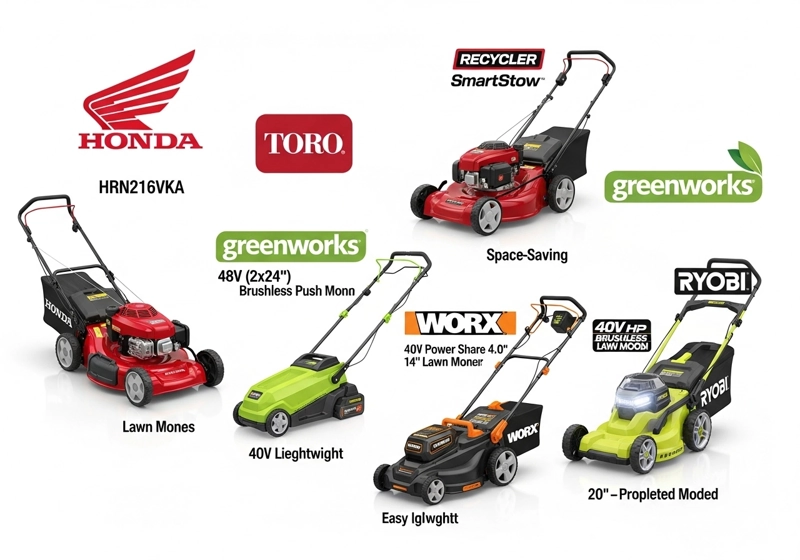
Based on what I see coming through my shop and customer feedback over the years, these brands consistently deliver good value without destroying your lawn mower budget. For detailed reviews and comparisons of these and other top brands, you’ll find comprehensive testing data and performance metrics.
1. Greenworks: The Battery Specialist
Greenworks has been perfecting cordless mowers longer than most companies, and their experience shows. The 40V system strikes the right balance of power and price, and I rarely encounter significant issues with it.
Best for: Small to medium-sized yards, individuals who prefer quiet operation and minimal maintenance. Typical price range: $200-400. Why I keep recommending them: The battery system is reliable, warranty support responds promptly when needed, and replacement parts are readily available.
2. Toro: The All-Around Champion
Toro makes quality equipment across every category. The Personal Pace self-propelled system is really intuitive, and its build quality remains consistent across different price points.
Best for: Any yard size, buyers who want proven reliability without taking a chance. Typical price range: $300-600. Why they work: An excellent dealer network ensures service support, consistent quality control, and substantial resale value if you ever upgrade.
3. Honda: The Long-Term Investment
Honda costs more upfront, but their mowers outlast almost everything else. If you plan to keep your mower for 10 years or more, Honda often costs less per year of actual service.
Best for: Medium to large yards, people who hate dealing with repairs and maintenance. Typical price range: $400-800. Why they’re worth it: Legendary engine reliability, excellent build quality throughout, and strong resale value when you’re ready to upgrade.
4. WORX: The Value Champion
WORX offers surprising quality at budget-friendly prices. They’re not flashy, but they’re well-engineered and use decent components where it matters most.
Best for: Small to medium yards, first-time buyers, or anyone on a tight budget. Typical price range: $150-350. Why I like them: Excellent value for your money, clever and compact designs that save storage space, and reasonable warranty coverage.
5. Ryobi: The Tool System Play
If you already own Ryobi tools, their mowers make perfect sense for battery sharing. Even if you don’t, the ONE+ system offers good value and flexibility across different tools.
Best for: DIY enthusiasts and individuals seeking battery compatibility across multiple tools. Typical price range: $200-400. Why they make sense: Battery compatibility saves money in the long term, offers solid performance for the price, and parts are widely available.
For budget-conscious buyers, WORX and Ryobi offer excellent value without compromising on essential quality. I always tell people to avoid store brands and unknown manufacturers. The small savings just aren’t worth the potential headaches.
The key is matching your spending to your actual needs. I’ve seen too many $150 mowers come through my shop needing $100 worth of repairs after just two seasons. Sometimes, spending $100 more upfront can save you money and frustration down the road.
Premium features, such as commercial-grade engines, advanced cutting systems, and sophisticated controls, add cost but may not provide real value for typical homeowners. Focus on solid build quality, the right amount of power for your yard, and features you’ll actually use regularly.
The best lawn mower brands really depend on what you need, but after fixing mowers for a decade, Honda, Toro, and Greenworks consistently rank highest for reliability in my experience. Honda builds the most durable gas engines, Toro offers the best overall balance of features and reliability, and Greenworks leads the battery mower revolution.
Most homeowners should plan on spending $250-400 for a quality mower that’ll serve them well for 5-7 years with basic maintenance. You can spend less ($150-$ 250) if you have a small yard or are okay with fewer features. Spending more ($400+) makes sense for larger yards or if you prefer premium features, such as self-propulsion.
Not necessarily. The best mower is the one that fits your specific needs and will serve you reliably for years. I’ve seen $800 mowers that were entirely wrong for the buyer’s situation, while a $300 model would have been perfect.
Choose your mower based on yard size and terrain: under 1,000 square feet works well with manual reel or compact electric mowers, quarter-acre properties require 20-inch battery or gas models, and half-acre or larger yards need 22-inch or larger cutting decks with self-propelled systems. However, terrain trumps size—steep slopes demand rear-wheel drive self-propelled mowers regardless of yard size. At the same time, complex layouts with many obstacles favor smaller, more maneuverable models even on larger properties. Focus on matching the mower to your specific situation rather than chasing fancy features, stick with proven brands, and remember that the right equipment should make mowing easier, not harder.
