
Lawn Mower Parts Guide 2025: OEM vs Aftermarket & Where to Buy
So your lawn mower parts are crapping out again. You know that sound I’m talking about, right? The one where something inside your mower decides to give up the ghost at the worst possible moment. Last spring, I was standing in my driveway holding what used to be a perfectly good blade, except now it looked like someone had taken a sledgehammer to it. My neighbor Bob walks over and goes, “Well, that’s gonna cost ya.”
Table of Contents
▼- Understanding OEM vs Aftermarket Lawn Mower Parts
- Essential Lawn Mower Parts: What You Need to Know
- Brand-Specific Parts Guide: Toro, John Deere & More
- Battery Replacement Guide: 12V Systems & Compatibility
- Where to Buy Lawn Mower Parts: Online vs Local Options
- How to Save 50% on Lawn Mower Parts: Money-Saving Tips
And honestly? He wasn’t wrong.
Here’s the deal with lawn mower parts that nobody bothers explaining when you’re buying the damn thing: it’s like owning a boat. The initial purchase is just the beginning. After fifteen years of running a lawn care business (and yeah, making pretty much every mistake you can make with parts), I’ve learned that understanding OEM versus aftermarket isn’t some boring technical stuff. It’s the difference between fixing your mower for fifty bucks or getting bent over at the parts counter for two hundred.
Whether you need toro lawn mower parts for that push mower that’s been faithful for six seasons, you’re dealing with a 12 volt lawn mower battery that won’t hold a charge anymore, or you just want to keep decent lawn mower blades on your riding mower without going broke… well, let’s talk.
Understanding OEM vs Aftermarket Lawn Mower Parts
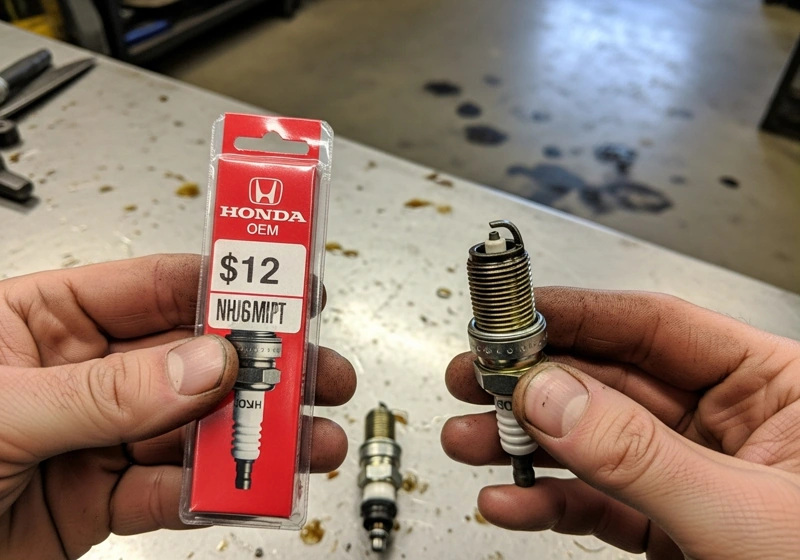
Alright, story time. Five years ago, I thought I was being smart by buying this “bargain” carburetor online. Saved sixty bucks compared to the dealer price. Guess what happened? The thing lasted exactly three weeks before it started acting like my teenage son trying to get out of chores, all kinds of excuses, and no actual work getting done.
OEM parts (Original Equipment Manufacturer, for anyone keeping score) are literally the same stuff that came on your mower when it rolled off the assembly line. Same factories, same materials, same everything. When Honda makes an engine for your mower, those are Honda OEM parts. Pretty straightforward.
Aftermarket lawn mower parts get more complicated. These are made by other companies that basically copy the original designs. Now, before you start thinking “cheap Chinese junk,” pump the brakes. Some aftermarket stuff is actually made in the exact same factories as OEM parts. They just don’t slap the brand name on there.
But here’s where it gets nuts. OEM parts can cost twice what aftermarket parts cost. Sometimes more. I’ve seen spark plugs go for twelve bucks at the dealer when the same plug (different box) costs four bucks at the auto parts store.
For engine internals, safety stuff like blade brakes, anything that could potentially hurt you if it fails? I usually tell people to stick with OEM. Following proper small engine safety standards is crucial when dealing with moving parts and potential hazards. Your life’s worth more than saving thirty bucks on a safety switch. But air filters? Spark plugs? Regular maintenance lawn mower blades? Quality aftermarket parts work just fine and won’t make your wallet cry.
The warranty situation is where things get tricky, though. My buddy Jim learned this the hard way when he put aftermarket parts on his john deere lawn tractor parts, and then the transmission went south. Suddenly, John Deere wouldn’t touch it because of the “non-genuine” parts. Expensive lesson right there.
Quality varies like crazy in the aftermarket world. Oregon, Rotary, MaxPower, these companies actually give a damn about their reputation. Then you’ve got companies that seem to exist solely to make the cheapest possible part that won’t immediately explode. Guess which ones I recommend.
Essential Lawn Mower Parts: What You Need to Know
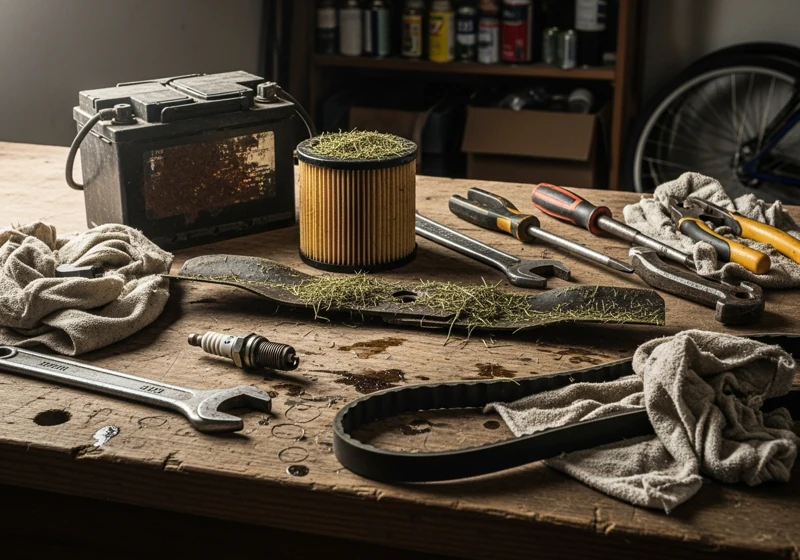
After messing around with over 200 different mower models (occupational hazard, I guess), I can tell you exactly which lawn mower parts are going to fail and when. It’s like having a crystal ball, except instead of predicting the future, I’m predicting expensive repairs.
Lawn mower blades are basically consumable items, like tires on your car. They wear out, they get dull, they hit rocks and bend. A sharp blade doesn’t just cut grass; it makes your entire lawn look professional instead of like you attacked it with a butter knife. Dull blades tear the grass instead of cutting it clean, which leaves those ugly brown tips that make your yard look diseased.
I tell people to sharpen twice a season, minimum. More if you’re cutting a lot of acreage or your yard is full of sticks and rocks. And here’s something most people screw up: blade balance. An unbalanced blade will shake your mower to pieces from the inside out. I’ve seen deck cracks, loose bolts, all kinds of problems from people not balancing their blades after sharpening. If you’re not sure about the proper technique for sharpening and balancing your blades, it’s worth learning the right way.
Different mower types require different blade considerations too. What works for a push mower won’t necessarily work for a riding mower or zero-turn. For more details on selecting the right blade for your specific mower type, blade material makes a bigger difference than most people realize.
The whole lawn mower battery replacement thing got way more complicated when electric mowers started taking over the market. Your traditional riding mower still uses a 12 volt lawn mower battery that’ll last maybe 3-4 years if you’re lucky and actually maintain it. But these new lithium-ion batteries in electric wheelchairs? They can go 5-7 years easily, but when they die, you’re looking at $200-400 for a replacement. Makes you appreciate that old pull-start sometimes.
Here’s what catches people: battery problems often aren’t actually battery problems. It’s the charging system going bad first. I can’t tell you how many “dead” batteries I’ve seen that were perfectly fine, just not getting charged properly.
Air filters get ignored until your mower starts sounding like it’s having an asthma attack. A clogged air filter kills power and makes your fuel consumption go through the roof. With gas prices still being stupid expensive, a $12 air filter can actually save you money over the season.
Spark plugs seem like no big deal until you’re yanking that starter cord twenty times trying to get your mower running. Fresh plugs make starting easier and improve fuel efficiency. Replace them every season if you actually use your mower, every other season if you’re more of a weekend warrior.
Drive belts on self-propelled and riding mowers don’t give you a warning when they’re about to die. One day everything’s fine, the next day your mower won’t move. Keep a spare belt around if you’ve got a riding mower. Speaking from experience here. For more details on preventing these surprise failures, check out our comprehensive lawn mower maintenance guide.
Brand-Specific Parts Guide: Toro, John Deere & More
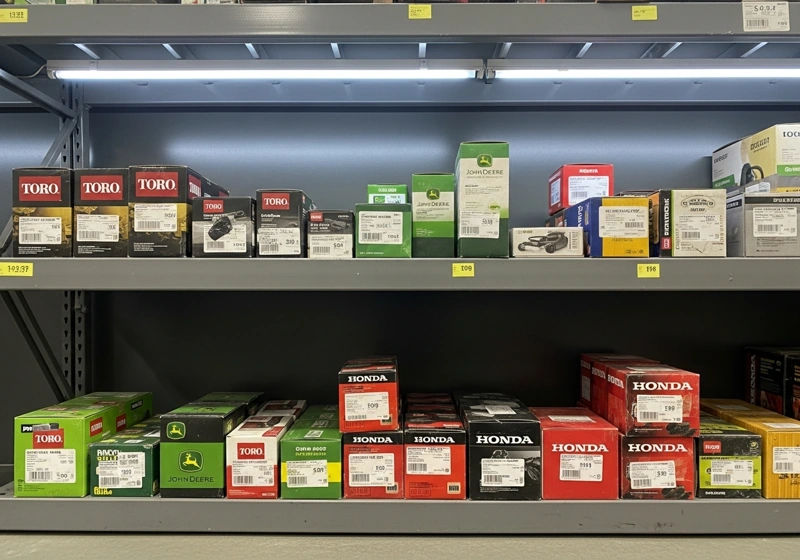
Toro lawn mower parts availability is honestly one of their best-selling points. These guys keep parts for machines that are fifteen years old, which is pretty much unheard of these days when everything’s designed to be thrown away after five years. Their toro push mower parts are stocked at most dealers, and they actually have online tools that work instead of making you call some guy named Earl who may or may not know what you’re talking about.
What I like about Toro is that they’re not trying to screw you on every single part. Yeah, they want you to buy genuine Toro stuff for the important components, but they’re not marking up air filters 300% just because they can. Toro push mower parts like handles and wheels are built like tanks, but when something does break, you can usually find replacements pretty quickly.
John deere lawn tractor parts are a whole different game. John Deere treats their parts like they’re made of gold or something. Higher prices, absolutely, but you can pretty much always find what you need. Their dealer network is solid, and their parts lookup system actually works, but you’re gonna pay for that convenience.
The problem with John Deere is older machines. They’ll support a tractor for twenty years, sure, but the prices on old parts can be absolutely criminal. I’ve watched people pay $250 for a pulley that you can get from aftermarket sources for sixty bucks. For john deere lawn tractor parts on machines over ten years old, aftermarket makes a lot of sense financially.
Honda engines end up in mowers from everybody and their brother, which means Honda parts are available everywhere. Their stuff costs more upfront, but Honda engines just don’t break as much as others. When they do need parts, you can usually find them locally instead of waiting for shipping.
Powersmart lawn mower parts are where you run into the challenges of newer brands trying to compete on price. Parts availability can be spotty, and documentation isn’t always great. But here’s the thing: most PowerSmart mowers use standard Honda or Briggs engines, so engine parts are easy to find even when the chassis stuff isn’t.
Battery Replacement Guide: 12V Systems & Compatibility
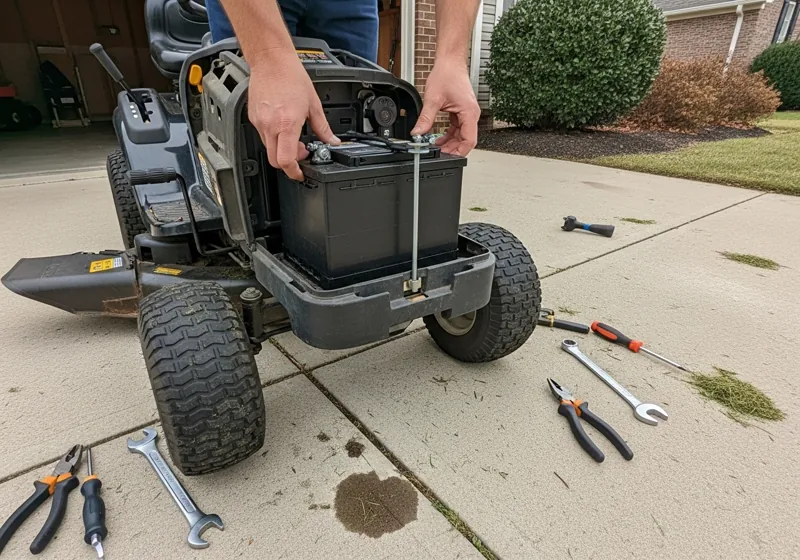
Lawn mower battery replacement used to be simple. Now? Not so much. Thanks to all these different battery technologies, you actually have to know what you’re doing instead of just grabbing any 12-volt battery off the shelf.
Most riding mowers still use standard 12 volt lawn mower battery systems, usually Group U1 or U1R sizes. The “R” just means the terminals are reversed, which matters more than you’d think when you’re trying to connect cables. These batteries put out 200-400 cold cranking amps, which is perfect for small engines but won’t work in your truck.
Don’t try putting a car battery in your mower. I’ve seen people do this. The mounting doesn’t fit right, and car batteries have higher CCA ratings that can actually damage small engine charging systems. Plus they’re way heavier than they need to be.
Lawn mower battery replacement timing actually matters. Batteries don’t like extreme temperatures when they’re being installed and conditioned. Do it in spring or fall when it’s not cold or blazing hot outside.
AGM batteries cost about 50% more than regular flooded batteries, but they’re maintenance-free and last longer. If you’re commercial or just hate checking water levels, AGM is worth the extra money.
Electric mower batteries are a different beast entirely. These lithium-ion packs last 5-7 years but cost $150-400 to replace. The trick to making them last is not running them completely dead and storing them partially charged over winter. Our guide covers proper winter storage techniques in detail.
Battery compatibility isn’t just about voltage. Size, terminal type, and mounting all have to match. I’ve watched people buy batteries online based only on voltage, then find out they don’t fit their mower at all.
Where to Buy Lawn Mower Parts: Online vs Local Options

Finding mower parts near me used to mean driving around to every dealer and parts store in town, hoping somebody had your part sitting on a dusty shelf somewhere. Now you’ve got options, but you also have to be smarter about avoiding junk and counterfeits.
Local dealers are still your best bet for OEM parts and actual technical help. They can look at photos and tell you what’s wrong, help with installation, and handle warranty stuff. But you’re gonna pay 20-40% more than online prices. For emergency repairs or when you need expert help, that premium is often worth it.
Online retailers completely changed the game. Amazon, eBay, and specialized places like Jack’s Small Engines have massive inventories and competitive prices. The downside is making sure you’re getting genuine parts that actually fit your mower. Always check part numbers against your manual instead of trusting product descriptions.
Used lawn mower parts near me can save serious money, especially for older machines or expensive parts like transmissions. Equipment salvage yards often have searchable databases now. Just remember you’re buying used parts with no warranty.
Geography affects what’s available and how much it costs. Down south, they stock tons of zero-turn and commercial equipment parts. Up north, more emphasis on snow blower attachments and cold-weather stuff. Buy counter-seasonal for the best deals.
A lot of manufacturers sell direct now through their websites. Prices are often competitive with online retailers, but you know you’re getting genuine parts that’ll fit right. Of course, having the right parts only matters if you’ve got the right mower for your needs in the first place.
How to Save 50% on Lawn Mower Parts: Money-Saving Tips
That 50% savings number isn’t me blowing smoke. It’s totally doable if you know what you’re doing and don’t need parts RIGHT NOW because your mower died in the middle of mowing season.
Buy consumables in bulk during the off-season. Air filters, spark plugs, oil filters, this stuff doesn’t go bad sitting on your shelf. I stock up during winter clearances and typically save 30-40% compared to buying individual parts during mowing season.
Aftermarket lawn mower parts from good manufacturers are your biggest single savings opportunity. Oregon blades, Champion spark plugs, Baldwin filters- these companies make stuff that’s as good as OEM at aftermarket prices. Just don’t chase the absolute cheapest prices, or you’ll end up like me with that crappy carburetor.
Seasonal timing is huge. Buy lawn mower blades and tune-up stuff in winter when nobody’s thinking about mowers. Buy batteries in the fall before storage season. Snow blower parts go on sale in March, mower parts hit rock bottom in November.
Cross-reference part numbers to find identical parts with different brand names. That $15 Briggs spark plug might be similar to a $5 Champion plug with the same specifications.
Generic items work fine for non-critical tasks. Fuel stabilizer, oil, and cleaning products don’t need fancy brand names to work properly. Store brands often perform just as well at half the price.
End-of-model clearances are gold mines. When manufacturers discontinue models, dealers liquidate remaining parts inventory at steep discounts. If your mower model is getting discontinued, stock up on common wear parts before they get hard to find.
Look, understanding lawn mower parts isn’t rocket science, but making smart decisions about OEM versus aftermarket, timing your purchases right, and knowing where to shop can literally save you hundreds of dollars over your mower’s life. Sometimes paying extra for OEM makes sense, sometimes quality aftermarket parts do the same job for way less money.
There’s something satisfying about keeping a good mower running with smart parts choices instead of junking it and buying new. Your bank account will appreciate it, and you’ll learn stuff that helps with future repairs.
Ready to hunt down the right parts? Start with your model number, do some research, and don’t be shy about asking questions at dealers or in online forums. Making good lawn mower parts decisions now saves you from expensive headaches later.
Good aftermarket lawn mower parts from reputable companies often perform just as well as OEM parts. Companies like Oregon, Rotary, and MaxPower actually care about quality control and stand behind their products. But there’s junk out there, too, so stick with established brands that offer warranties. For safety-critical stuff like blade brakes or engine mounts, OEM parts give you extra peace of mind.
Cheapest isn’t always best value, but legitimate savings come from online retailers like Amazon and specialty sites for both OEM and aftermarket lawn mower parts. End-of-season dealer clearances can save you 40-50%. Buying maintenance supplies in bulk during winter gives you the best combination of price and convenience.
Start with your owner’s manual and the model/serial plate on your machine. These give you exact specifications. Manufacturer websites usually have parts lookup tools that use your model number. When buying lawn mower parts online, verify part numbers exactly instead of trusting model descriptions.
Used lawn mower parts near me can save big money on expensive components like engines or transmissions. But used parts come with risks: unknown history, no warranties, potential hidden problems. Makes the most sense for older mowers where new parts cost almost as much as replacing the whole machine, or for rare, discontinued parts.
Toro lawn mower parts from Toro meet exact factory specs and come with manufacturer backing. Quality aftermarket alternatives often work just as well at 30-50% less cost, but warranty terms might be different. For Toro push mower parts like handles, the aftermarket is usually fine. For engine or safety components, OEM gives you extra assurance.
